Boston Dynamics CEO: Rohit Prasad Takes the Role
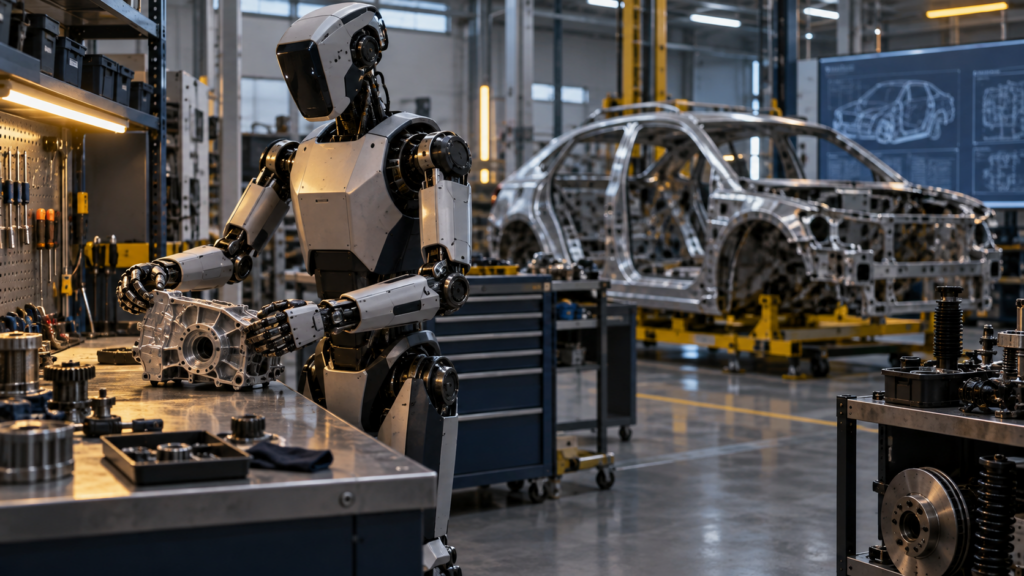
Boston Dynamics CEO Rohit Prasad takes up the role effective October 7, 2026, following the company’s announcement a day earlier. The official statement connects the appointment to the robotics company’s ambitions in physical AI and commercial deployment.
Event date: October 7, 2026; appointment announced October 6 · Sources checked: October 7, 2026
What the Boston Dynamics CEO appointment confirms
Boston Dynamics describes Prasad’s background in AI leadership at Amazon, including work associated with Alexa and Amazon’s general-intelligence efforts. The company also points to his earlier career at Raytheon BBN. These are the relevant confirmed credentials behind the leadership announcement.
The announcement sets a direction toward combining AI capability with robotics. It does not establish a new robot release date, a completed deployment program or a performance benchmark. Those milestones require their own evidence.
Physical AI brings a different operating environment
A robot has to connect perception and planning with motion in a changing physical space. The consequences of an action can be immediate, and real-world environments contain obstacles that a text-only interface does not face. This is why a leadership story should be separated from claims about the reliability of a particular machine.
The relevant questions include what tasks the system can perform, under which conditions, with what supervision and at what operating cost. A demonstration can show one task, while a production deployment needs repeatable behavior over a much longer period.
Boston Dynamics CEO — xpu live analysis: watch operational evidence
For industry readers, the appointment is a signal of strategic emphasis. Its practical significance will become clearer through product documentation, customer deployments and evidence about reliability. A familiar AI executive’s arrival cannot substitute for those records.
Our editorial view is that industrial robotics should be evaluated with task-specific measures. Useful reporting would identify the environment, human intervention rate and boundaries of autonomous operation. It should also distinguish a company’s planned direction from a capability already available to customers.
Compute remains part of the story, but a robot’s total deployment economics can include maintenance, integration and workflow changes as well as inference. The next developments to watch are therefore concrete operating milestones. Prasad’s first day establishes the leadership transition; the following months will provide evidence about how the strategy translates into products and industrial use.
Sources and further reading
Related on xpu live: How to evaluate AI research reports.