NVIDIA / Hopper
H200 NVL
| Provider / plan | Price / GPU-hour | Rental type | Terms & configuration | Last checked | Provider pricing link |
|---|---|---|---|---|---|
| Runpodbest-on-demand | $3.79Updated 2026-11-22 · 15:43 UTCLowest flexible rate | On-demandNo reservation | 1 GPU minimumSee providerView detailsSecure Cloud: lowest public on-demand GPU-hour list rate among enabled clouds. Not a capacity guarantee; storage/networking extra.
|
2026-11-22Auto-collected | View pricing ↗ |

Prices are dated listings, not live availability. Compare minimum GPU counts and commitments. Storage, networking and taxes may add charges; CPU/RAM inclusion depends on the provider and is shown beside each serverless rate.
H200 NVL rental prices on xpu live are linked to Runpod. This hardware profile records 141 GB of HBM3e memory and the Hopper architecture. Use this page to compare the exact allocation with its provider offers and source dates.
H200 NVL specifications and edition
NVIDIA specifies 141 GB nominal memory; Runpod reports 143 GB in its GPU catalog. The source identity is H200 NVL, not H200 SXM. Power is configurable in the 450–600 W range.
The recorded form factor is PCIe NVL. Memory bandwidth is 4800 GB/s. Maximum recorded board power is 600 W. These are hardware specifications; the rented host’s CPU, RAM, disk and network allocation are separate resources. Review the offer details for the actual server configuration.
Where to rent H200 NVL
Compare Runpod in the rental table. Prices are received by the pricing service and linked to this GPU record. A timestamp identifies the observation used for each listing. A missing or unavailable offer does not mean the hardware is free; it means no eligible active price is available in that listing.
For an hourly estimate, multiply the unit rate by the minimum billed allocation and your expected runtime. Storage, data transfer and taxes can add charges. Serverless GPU time may exclude CPU and RAM, while an on-demand machine can be billed for time spent waiting or loading a model. Check the selected plan before deployment.
Model memory and software
Budget memory for weights, KV cache, activations and runtime workspace. Quantization can reduce weight storage, but usable capacity also depends on context length, batch size and the inference engine. Test the intended model and workload rather than treating nominal VRAM as a guarantee that every configuration fits.
Use a compatible NVIDIA driver and a CUDA-enabled framework or renderer that supports this architecture. Check the engine’s supported precision, quantization kernels and container requirements. Hardware Tensor or ray-tracing features do not establish a measured token rate for your application.
Compare H200 NVL rental costs
Compare the same model, precision, input length and concurrency across candidate machines. Record end-to-end latency, useful throughput and total job cost, including model loading and supporting resources. This makes the comparison more useful than ranking hardware solely by nominal peak arithmetic.
Browse the GPU explorer for other memory capacities and architectures, or compare GPU cloud providers. The specifications and source links below remain separate from current rental availability, so you can review the hardware even when a provider has no capacity.
Review the official H200 NVL hardware reference and the provider’s checkout conditions before deploying a job. Product images are reference views; the exact installed board and host topology depend on the advertised rental configuration.
CHOOSING THIS GPU
Is it right for your workload?
NVIDIA specifies 141 GB nominal memory; Runpod reports 143 GB in its GPU catalog. The source identity is H200 NVL, not H200 SXM. Power is configurable in the 450–600 W range.
Best suited to
- Inference and development workloads that fit the recorded memory configuration
- Task-specific benchmarking with the intended model, precision and software
- Comparing hourly rental options for this exact hardware identity
Strengths
- 141 GB recorded nominal memory
- Hopper architecture
- Provider-specific pricing and observation timestamps
Things to consider
- Rental availability and included CPU/RAM vary by provider
- Storage, networking and multi-GPU minimums can change the final cost
- Different form factors and partition sizes are separate catalog entries
HARDWARE DETAILS
Inside the GPU
NVIDIA specifies 141 GB nominal memory; Runpod reports 143 GB in its GPU catalog. The source identity is H200 NVL, not H200 SXM. Power is configurable in the 450–600 W range.
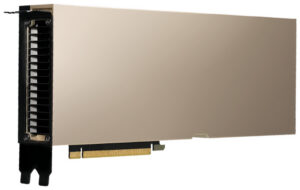
Image: H200 NVL reference product view. Source: NVIDIA.
- Manufacturer
- NVIDIA
- Architecture
- Hopper
- VRAM (GB)
- 141
- Memory type
- HBM3e
- Form factor
- PCIe NVL
- Memory bandwidth (GB/s)
- 4800
- Maximum board power (W)
- 600
- CUDA cores
- Not verified for this edition
- Tensor cores
- Not verified for this edition
- Ray tracing cores
- Not verified for this edition
- CUDA capability
- Not verified for this edition
- Memory ECC
- Not verified for this edition
- Host interface
- Not verified for this edition
- GPU interconnect
- Fourth generation; up to 900 GB/s per GPU in supported NVLink configurations
- Hardware partitioning (MIG)
- Not verified for this edition
- Cooling
- Not verified for this edition
Hardware capabilities are not a guarantee of access in a cloud instance. Check the exact edition, GPU allocation and server topology in the rental offer.
MODEL MEMORY
Plan your model size
Weight memory is approximately parameter count × bytes per parameter; allow additional capacity for KV cache, activations and runtime workspace. Nominal VRAM alone does not establish that a model fits. MIG capacity is the allocation size, not total parent GPU memory.
| Example model class | Weight format | Raw weights ≈ | Minimum GPUs for weights only |
|---|---|---|---|
| Llama 3.1 8B ↗ | 4-bit | 4 GB | 1Runtime needs more memory |
| Llama 3.1 8B ↗ | FP16 | 16 GB | 1Runtime needs more memory |
| Qwen2.5 14B ↗ | 4-bit | 7 GB | 1Runtime needs more memory |
| Qwen2.5 32B ↗ | 4-bit | 16 GB | 1Runtime needs more memory |
| Llama 3.1 70B ↗ | 4-bit | 35 GB | 1Runtime needs more memory |
| Llama 3.1 70B ↗ | 8-bit | 70 GB | 1Runtime needs more memory |
| Llama 3.1 70B ↗ | FP16 | 140 GB | 1Runtime needs more memory |
Arithmetic lower bound: rounded parameter count × bits per weight ÷ 8, in decimal GB. Excludes quantization metadata, KV cache, activations, CUDA workspaces and training states. Actual model sizes differ from their rounded names. No context length, batch size or concurrency is guaranteed. GPU counts assume supported model sharding and can be higher in practice. Quantized checkpoints and compatible kernels are required for 4-bit/8-bit execution.
SOFTWARE & PERFORMANCE
Before you deploy
Software compatibility
Use a compatible NVIDIA driver and CUDA-enabled framework/container. Validate the exact architecture, precision and inference-engine kernels before deployment. Volta and MIG partitions can have different support constraints from a full current-generation GPU.
Measured benchmarks
A reproducible, comparable application benchmark has not yet been recorded for this edition. Peak TFLOPS above are not measured tokens per second or image-generation speed.
Compare tests using the same model, precision, GPU count, engine version, input/output length and batch or concurrency. A provider’s server configuration can change the result.
COMPARE YOUR OPTIONS
Alternatives to consider
BUDGET YOUR RUN
GPU cost estimator
GPU compute only: hourly rate × billable hours × GPU count. CPU, RAM, storage, egress, taxes, billing increments and minimum terms may add charges. Serverless hours mean active GPU task time; spot capacity can be interrupted. Reserved commitments and quote-only offers are excluded from this simple hourly estimator.