OpenAI Math Results: 372 Families, 722 Manuscripts
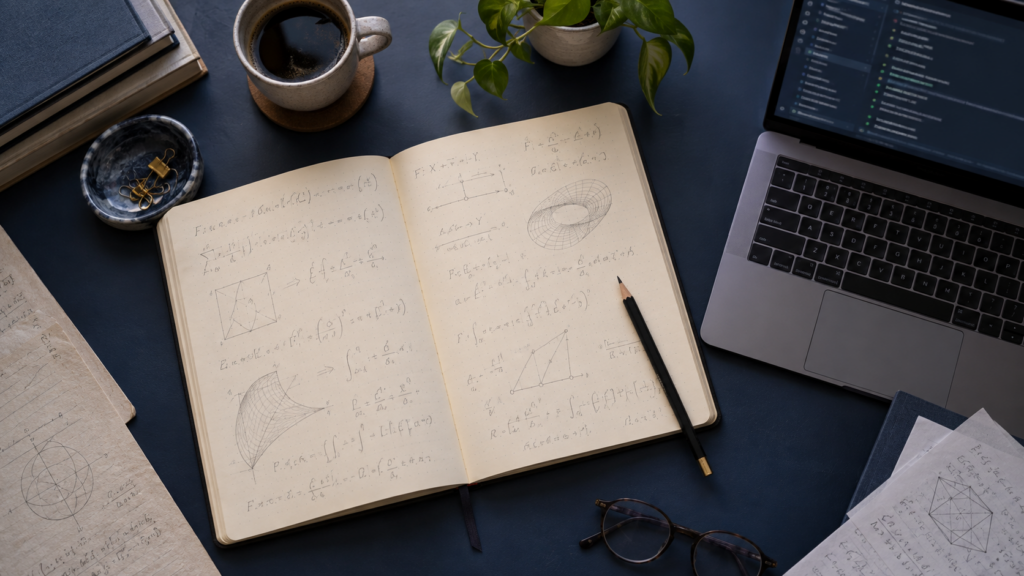
OpenAI math results now comprise 722 manuscripts across 372 result families. OpenAI published the collection on October 6, 2026. The public GitHub repository makes the material inspectable. Those counts describe different parts of the collection; they do not mean that 372 independent, fully verified proofs have all passed the same review process.
Event date: October 6, 2026 · Sources checked: October 7, 2026
What the OpenAI math results contain
For example, the repository groups principal results with supporting arguments, consequences and alternative proofs. It includes preprints, Lean material and selected reasoning traces. Its own documentation warns that material without completed formalization may contain issues and explains how revisions will be preserved.
In its announcement, OpenAI describes work produced with an internal frontier model and plans for mathematical review and follow-up research. The release invites examination of the actual arguments. However, publishing a manuscript does not confirm that its central mathematical claim is correct.
What Lean verification can and cannot show
A machine-checked formal proof can provide strong evidence that a stated conclusion follows from its formal assumptions. Even so, readers need to inspect those assumptions and check that the formal statement matches the intended problem. Similarly, a successful check of one file does not automatically validate every manuscript in a collection.
The repository’s distinction between formalized and unformalized work therefore matters. It prevents a useful research release from being presented as one uniform certification. This article makes no claim that the collection settles the Navier–Stokes problem.
OpenAI math results — xpu live analysis: inspect the chain of evidence
For researchers and developers, the valuable feature is the opportunity to examine an artifact rather than rely solely on a model’s answer. A clear review should identify the statement, assumptions, proof status and relevant repository revision. If a result changes, the revision history helps readers understand what was corrected.
More broadly, mathematical success is a specialized capability. It therefore cannot establish a universal ranking of models for coding, document analysis or tool use. Each application needs its own evaluation. Next, independent scrutiny of individual results, reproducible formal checks and documented corrections will provide useful evidence. That process takes longer than announcing a collection, but it produces a more reliable account of what the model achieved.
Sources and further reading
Related on xpu live: How to read AI research evidence.